
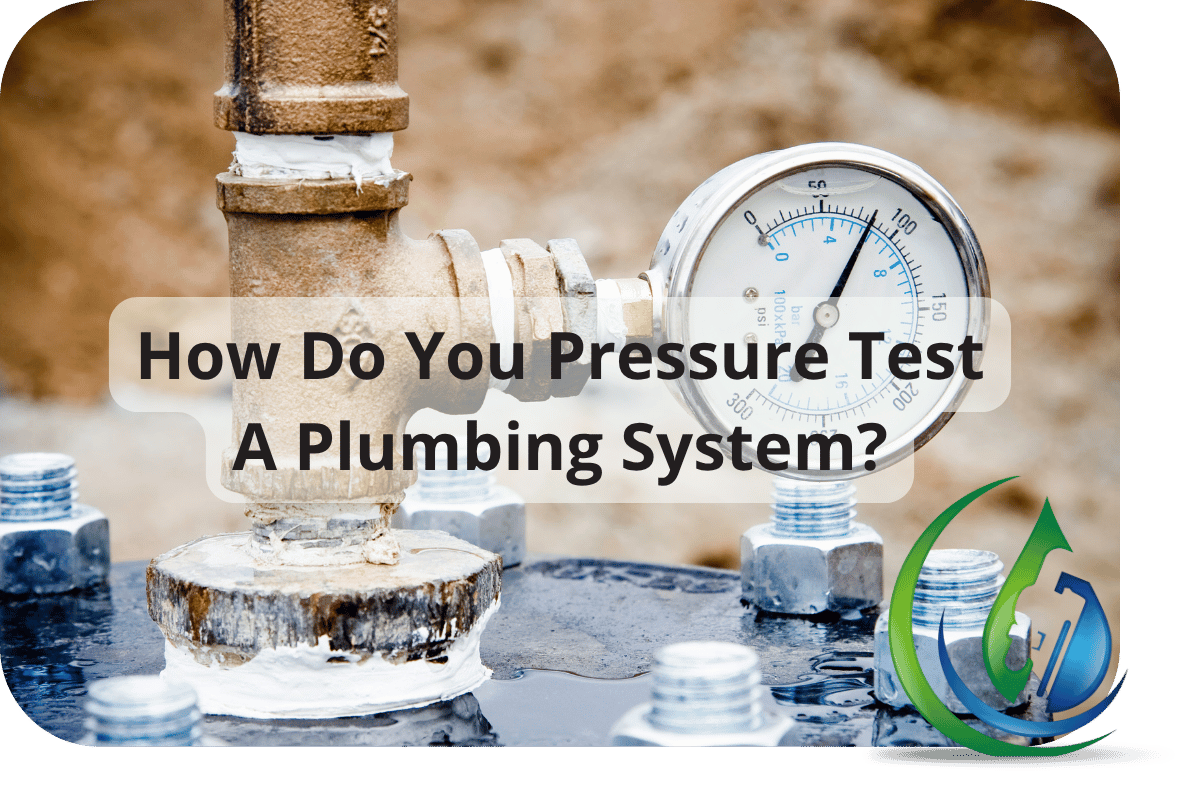
Wondering how do you pressure test a plumbing system before a renovation or after noticing a possible leak? The answer depends on what you need to check. A gauge on an outdoor faucet measures normal supply pressure. A proper leak test isolates piping and checks whether it holds the required pressure without leaking.
What Should You Know Before Starting?
- Checking household pressure is different from testing pipes for leaks.
- A threaded gauge can give you a basic reading at an outdoor faucet.
- Shut off faucets and water-using appliances before taking that reading.
- A full test may require isolation valves, plugs, a pump, and inspection.
- Testing requirements vary by pipe type, location, and work being done.
- Compressed air can be dangerous, especially in plastic piping.
A Pressure Reading Is Not The Same As A Leak Test
When people search “how do you pressure test a plumbing system,” they often mean one of three different checks.
| Check | What It Tells You | Common Method | Household pressure reading | How much static pressure reaches a faucet | Threaded gauge at a hose spigot | Water supply leak test | Whether isolated supply piping holds pressure | Water-filled line and test equipment | Drain and vent test | Whether waste and vent connections are tight | Plugged piping and standing water |
|---|
Static pressure is measured when no fixture is running. It is not the same as flow, which describes how much water comes through a faucet over time. A partly blocked aerator, for example, can cause weak flow even when incoming pressure is normal.
A 55 PSI Reading Does Not Prove Your Pipes Are Leak-Free. It Only Shows The Pressure At That Connection.
How To Check Water Pressure At A Hose Spigot
For a basic homeowner check, attach a suitable pressure gauge to a hose spigot, turn off other water uses, open the spigot fully, and read the dial. This is a supply-pressure measurement, not a certified leak test.
- Turn off faucets, showers, sprinklers, washing machines, and other water-using equipment.
- Find an accessible outdoor spigot or cold-water laundry connection. Ideally, choose one supplied through your home’s pressure regulator.
- Attach the gauge securely to the threaded outlet.
- Open the valve fully and allow the reading to settle.
- Record the PSI, close the valve, and remove the gauge carefully.
According to the EPA’s home maintenance guidance, incoming household water pressure generally works best between 45 and 60 PSI. A reading above 80 PSI deserves professional attention because excessive pressure can strain fixtures and connections.
If an outdoor faucet bypasses your pressure-reducing valve, its reading may differ from indoor plumbing.
How Professionals Test An Isolated Water Line
For newly installed or repaired pipes, “how do you pressure test a plumbing system” means checking the piping itself for tightness. The work must match the manufacturer’s instructions, the adopted plumbing code, and local inspection requirements.
- Identify the section being tested and inspect exposed fittings, connections, and caps.
- Shut off or isolate equipment not rated for the planned test, such as the water heater and connected appliances, according to their instructions.
- Fill the section with potable water, then vent trapped air from appropriate high points.
- Connect approved testing equipment and gradually raise pressure to the required level. Do not guess a universal PSI.
- Isolate the pressure source and monitor the reading while inspecting each accessible joint for moisture.
- If leakage is found, safely release pressure, repair the connection, and repeat the test before covering the work.
Under Washington’s adoption of the 2021 Uniform Plumbing Code, code compliance matters beyond getting a needle to stay still.
In Tacoma, the city’s water line installation requirements call for residential water service testing at line pressure for at least 15 minutes, witnessed by an inspector. Commercial water service has a different requirement: 1.5 times line pressure or 100 PSI for at least 30 minutes.
Those rules address water service piping between the building and meter, not every indoor repair.
Why Air Testing Requires Extra Care
Introducing air into a sealed line is not a shortcut for an ordinary homeowner. Compressed gas stores energy, and a failed fitting or plug can become dangerous.
Plastic pipes generally must not be air-tested unless the applicable code and the specific manufacturer’s instructions allow an exception for that system.
Never connect a compressor to unknown household piping and increase pressure until something happens. A plumber can determine whether water testing is appropriate, whether freezing conditions change the procedure, and which components must be isolated.
Safety Tip: Keep People Clear Of Pressurized Test Plugs And Never Exceed The Rating Of The Weakest Component.
What If The Reading Drops But No Leak Is Visible?
A falling reading needs investigation, but it does not automatically identify a broken pipe behind the wall. First, check the test connection, temporary caps, isolation valves, and whether temperature changes may affect the reading. Then inspect joints, manifolds, and recently repaired sections.
Drains are different. If you ask “how do you pressure test a plumbing system” when the suspected problem is a drain or vent line, the procedure changes.
The International Code Council’s explanation of drain testing describes a standing-water test, with openings sealed and a water column maintained for at least 15 minutes, rather than a normal hose-spigot reading.
For an occupied home, you can also check the water meter during two hours of no use. The EPA’s leak-checking advice notes that a changing meter reading may indicate a leak.
A silent toilet flapper, irrigation line, or fixture connection may be responsible, not necessarily concealed supply piping.
Local Help When A Test Finds Trouble
At Pierce County Plumbing, we know that a suspicious reading can leave homeowners wondering whether they need a small repair or something more involved. Our pipe services include inspections, repairs, replacements, new installations, and a full system check.
Whether you have a leak after a remodel, aging pipes, or recurring pressure problems, our team can assess the affected plumbing and explain the next steps. We provide an on-site visit and straightforward quote before completing approved work.
Why Homeowners Choose Us
- Washington contractor license PIERCCP791RG, with licensed, bonded, and insured service.
- Owner and lead plumber Joseph Clark brings nearly three decades of industry experience.
- Pipe inspection, repair, replacement, and new installation services.
- Vetted and trained technicians with fully stocked trucks.
- Transparent pricing and an on-site quote before work begins.
- 24/7 emergency plumbing services, plus 114 Google reviews displayed on our website.
Get Your Plumbing Checked Before A Small Leak Grows
If you are dealing with unstable pressure, a suspected hidden leak, or recently installed piping, we are ready to help. We serve Tacoma, Puyallup, Lakewood, Gig Harbor, other Pierce County communities, Thurston County, and South King County.
Get in touch to schedule an assessment and receive clear guidance on the next step.
Frequently Asked Questions
Can I Pressure Test Plumbing With A Garden Hose?
A garden hose can supply water to appropriate testing equipment, but it does not replace a properly isolated leak test. The setup must be approved for the material and required test conditions.
Do Hot And Cold Water Lines Need Separate Tests?
They may need separate tests when branches are isolated or an inspection requires it. A plumber will confirm which sections are included and which fixtures must be disconnected.
Can Pipes Leak Even With Normal Water Pressure?
Yes, normal static pressure does not rule out a slow leak. Check the water meter and watch for moisture, stains, or unexplained water use.
Should Plumbing Be Tested Before Drywall Goes Up?
Yes, concealed plumbing should receive required inspection and testing before it is covered. Confirm the inspection stage with your local permitting authority.
Why Is Faucet Flow Weak When Pressure Is Normal?
A restricted aerator, partially closed valve, or clogged fixture can reduce flow without lowering static pressure. Checking the affected outlet helps narrow down the cause.
