
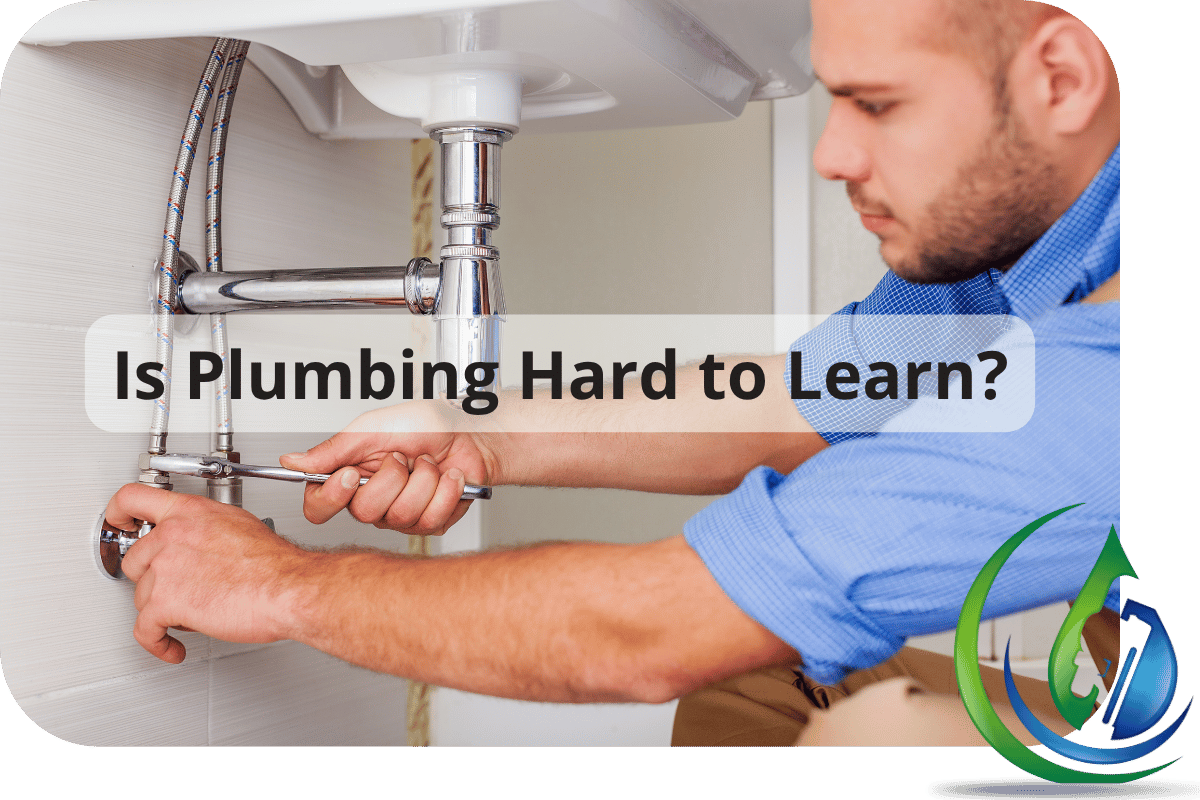
Is Plumbing Hard to Learn? An Honest Look at Skills, Training, and Career Potential
Is plumbing hard to learn? It can be challenging at first, but it is a practical skill that most motivated people can develop through structured training, supervised work, repetition, and patience. You do not need to understand every pipe, fitting, code, and drainage problem on your first day. The trade is learned one skill and one job at a time.
All About Learning Plumbing
- Plumbing is not easy, but it is learnable for people willing to practice.
- Beginners usually start with basic tools, safety, materials, and simple installations.
- Hands-on experience is just as important as classroom education.
- Basic math, problem-solving, physical stamina, and attention to detail all matter.
- Training commonly combines classroom instruction with supervised fieldwork.
- Mistakes can cause water damage, contamination, or code violations, so professional supervision is essential.
- A plumbing career can offer long-term growth for dependable people who enjoy practical work.
What Makes Plumbing Challenging to Learn?
The hardest part is not memorizing the names of tools. It is learning how complete building systems work together and recognizing what is causing a problem when the answer is not immediately visible.
A slow drain, for example, may seem simple. The actual cause could be a localized clog, grease buildup, incorrect pipe slope, root intrusion, a damaged sewer line, or a venting issue. A technician must gather clues, inspect the system, and select the right solution without creating additional damage.
You Must Understand More Than Pipes
A plumber needs working knowledge of:
- Water supply systems
- Drain, waste, and vent systems
- Fixture installation
- Water pressure
- Pipe sizing and slope
- Local plumbing codes
- Backflow prevention
- Water heaters
- Sewer and drainage systems
- Safe tool and equipment use
Plumbing theory provides the foundational knowledge, but field conditions rarely look as clean as diagrams in a textbook. Pipes may be hidden behind walls, installed in tight crawlspaces, altered by previous repairs, or affected by decades of wear.
The Work Requires Careful Problem-Solving
Many calls begin with a symptom rather than a confirmed cause. A homeowner may report low water pressure, an unusual noise, a wet cabinet, or a recurring backup.
The plumber job is to determine what is happening before recommending a repair. That process may involve visual inspection, pressure testing, drain equipment, moisture detection, or a sewer camera. Good plumbers learn not to make assumptions too quickly.
Small Errors Can Become Expensive
A loose fitting, poor connection, incorrect slope, or improperly installed valve can cause serious problems later. Water may leak slowly inside a wall before the damage becomes visible. An incorrect drainage connection can also create odors, recurring clogs, or sanitation concerns.
That level of responsibility is one reason professional training matters. Beginners need supervision until they can complete work safely, accurately, and according to applicable codes.
Do You Need to Be Good at Math?
You need practical math skills, but you do not need to be an advanced mathematician.
Most everyday calculations involve measurements, fractions, angles, pipe lengths, fixture distances, elevation changes, and material quantities. You may also need to calculate slope or determine whether a planned layout meets job requirements.
For example, installing a drain line requires more than connecting two points. The plumber must measure the run, account for fittings, maintain the proper slope, and make sure the layout works within the available space.
These calculations become easier with repetition. Accuracy matters more than doing them quickly.
How Long Does It Take to Learn Plumbing?
You can learn basic concepts within several months, but becoming a capable, independent professional takes considerably longer.
Most people think you need years before you can perform any useful work. In reality, trainees may begin learning jobsite safety, tool handling, material identification, and basic installation tasks early in a structured training program. More advanced responsibilities are added as their competence develops.
The First Stage: Learning the Fundamentals
Early training may cover:
- Workplace and jobsite safety
- Common plumbing tools
- Pipe and fitting identification
- Measuring and cutting
- Basic fixture connections
- Leak prevention
- Reading simple plans
- Cleaning and preparing work areas
At this stage, speed should not be the main goal. A beginner should focus on learning the correct process and understanding why each step matters.
The Middle Stage: Building Field Judgment
With more experience, trainees begin connecting individual tasks to the larger system. They may learn how to recognize poor drainage, diagnose leaks, replace damaged components, assist with water heater work, and understand why one repair method is more appropriate than another.
This is where plumbing knowledge becomes practical judgment.
A book may explain how a system should be installed. Real homes teach you how systems age, fail, and react to previous modifications.
The Advanced Stage: Working Independently
Independent work requires more than technical ability. A professional must manage time, communicate with customers, document findings, protect the property, understand code requirements, and know when a situation requires additional support.
The time commitment varies by state, certification path, specialty, and training structure. Anyone considering the field should review current local requirements rather than relying on generalized online advice.
Can You Learn Plumbing Through Trade School?
A trade school or plumbing program can provide a strong introduction, but classroom education alone does not replace supervised fieldwork.
Plumbing schools may teach safety, code basics, mathematics, system design, materials, and tool use. Some programs also provide shop-based practice. This can help students become more prepared for entry-level opportunities.
However, a classroom cannot recreate every damaged pipe, tight crawlspace, older building, unusual fixture, or hidden leak found on an actual service call.
School Versus Apprenticeship Training
| Learning path | Main benefit | Possible limitation |
|---|---|---|
| Trade school | Structured lessons and technical fundamentals | May offer limited real-job experience |
| Apprenticeship | Paid, supervised, hands-on development | Entry may be competitive |
| Employer training | Direct exposure to company methods and daily work | Quality varies among employers |
| Online programs | Flexible introduction to basic concepts | Cannot replace physical practice or supervision |
The strongest path usually combines technical education with real jobsite training.
What Personal Qualities Help Someone Succeed?
The people who perform well in skilled trades are not always those who understand everything immediately. They are often the people who listen carefully, ask useful questions, accept correction, and avoid repeating preventable mistakes.
Patience and Attention to Detail
Some repairs require slow, careful work. Rushing a connection or skipping an inspection can create a leak that appears after the job is finished.
Physical Readiness
Plumbers may work while kneeling, climbing, lifting materials, reaching into cabinets, or entering crawlspaces. The work can be physically demanding, although the exact demands depend on the position and type of projects handled.
Clear Communication
Customers want to know what went wrong, what must be repaired, and what they can do to prevent another problem. A skilled technician should be able to explain complicated systems in plain language without alarming or confusing the customer.
Reliability
Employers need trainees who arrive on time, follow safety procedures, take care of tools, and complete assigned work responsibly. Technical ability grows with training. Dependability must be demonstrated every day.
Is Plumbing a Good Career for the Right Person?
It can be a rewarding career for someone who enjoys practical problem-solving, visible results, and work that directly helps people.
Plumbing is needed in homes, businesses, public facilities, construction projects, and industrial settings. Career options may include residential service, commercial installations, new construction, maintenance, inspection, estimating, supervision, or business ownership.
The field may be a good fit when you:
- Prefer hands-on work over sitting at a desk all day
- Enjoy diagnosing problems
- Can remain calm when a job becomes complicated
- Are willing to continue learning
- Care about accuracy and safety
- Communicate respectfully with customers and coworkers
- Want a skill that can support several career directions
Potential earnings and opportunities vary by location, certification, specialty, union status, employer, and level of experience. Choose the trade because the work suits your abilities and interests, not because an online post promises instant income.
Common Misconceptions About Learning the Trade
“You Must Already Be Mechanically Gifted”
Natural mechanical ability can help, but it is not a requirement. Many skills are developed through repetition, observation, and correction.
“You Can Learn Everything From Videos”
Online videos can explain concepts, but they cannot inspect your work, identify unsafe decisions, or provide the supervised experience required for professional development.
They may be useful for general education. They should not be treated as a replacement for qualified instruction.
“Every Plumbing Job Is the Same”
Service repairs, remodels, new construction, commercial systems, and sewer work can require different methods and equipment. Even two homes with the same symptom may have completely different underlying problems.
“Once You Finish Training, You Know Everything”
Materials, codes, equipment, and diagnostic methods continue to change. Experienced plumbers still encounter unfamiliar situations. A professional career requires ongoing learning and good judgment.
Advice From a Local Plumbing Team
Pierce County Plumbing has served homeowners and businesses throughout Pierce County, South King County, Thurston County, Tacoma, Seattle, and the surrounding Puget Sound communities. Led by owner and lead plumber Joseph Clark, the company brings decades of hands-on residential, commercial, union, and non-union experience to plumbing repairs, drainage work, water heaters, sewer lines, remodels, and new construction.
Contact Pierce County Plumbing at 253-655-0704 or info@piercecountyplumbing.com. The office is located at 2367 Tacoma Ave S, Suite 220, Tacoma, WA 98402. Contact us to discuss your plumbing needs with an experienced local team.
Frequently Asked Questions
Can anyone learn to become a plumber?
Most people can develop the necessary skills when they receive proper instruction, supervised practice, and enough time to improve. Success depends more on consistency, responsibility, and willingness to learn than natural talent alone.
Is becoming a plumber physically difficult?
The work can be physically demanding. It may involve lifting, bending, kneeling, climbing, and working in small spaces. Proper lifting methods, safety practices, tools, and teamwork help reduce unnecessary strain.
Do plumbers need strong academic skills?
Plumbers need practical reading, measurement, basic math, and problem-solving skills. They must also understand instructions, diagrams, codes, and safety information. Advanced academic ability is less important than accuracy and applied learning.
Can I become a plumber without attending college?
A traditional four-year college degree is generally not the standard entry path. Depending on local rules, candidates may enter through apprenticeship, technical education, trainee registration, or an approved employer-based pathway.
Is plumbing harder than electrical work?
Neither trade is universally harder. They involve different systems, risks, codes, tools, and problem-solving methods. The better fit depends on your interests, strengths, preferred work environment, and training opportunities.
Can I teach myself basic plumbing?
You can learn general concepts and simple maintenance information, but professional work requires supervised practice and knowledge of applicable codes. Incorrect repairs can cause leaks, property damage, contamination, or safety hazards.
Start With the Right Expectations
Plumbing is challenging because the work combines technical knowledge, physical skill, customer communication, and serious responsibility. It is also learnable. With good training, professional supervision, patience, and repeated hands-on practice, a motivated beginner can gradually build a valuable lifelong skill.
For dependable plumbing service from an experienced neighborhood team, contact Pierce County Plumbing today.
